




BOSTON — Last month, a U.S. Appeals Court in Boston provided relief to colleges and universities across the country that faced sudden grant funding cuts last year. Colleges like Northern Arizona University (NAU) and the University of Nevada, Las Vegas (UNLV) responded to the challenges differently, but the future of research remains uncertain for both institutions.
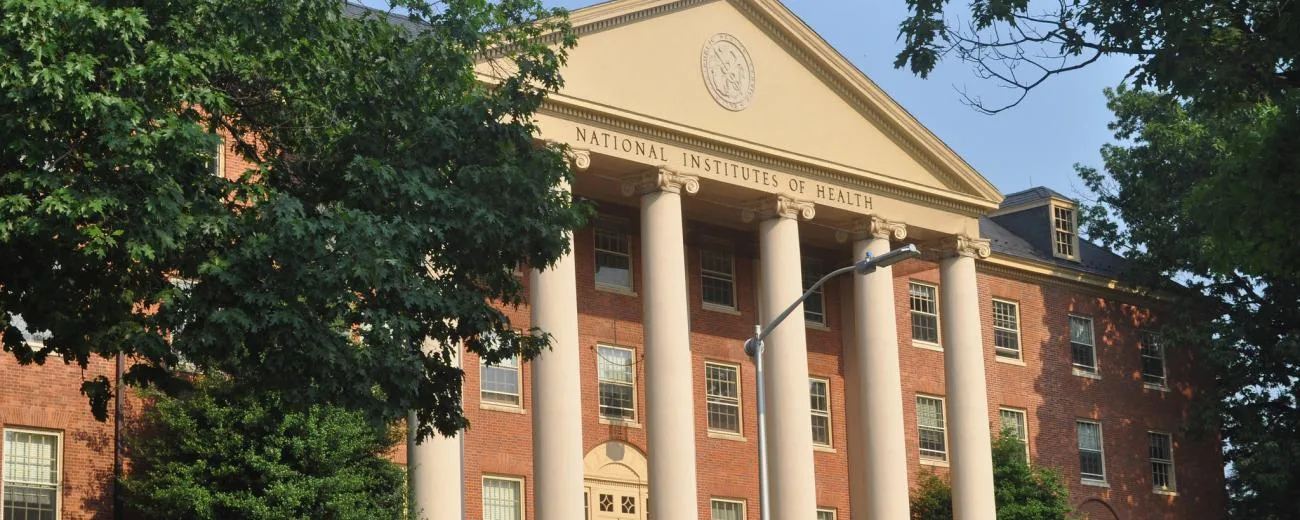
The Boston-based 1st U.S. Circuit Court of Appeals upheld an injunction that went into place last year which prevented the National Institutes of Health (NIH) from cutting grant funds to universities engaged in scientific and medical research. The three-judge panel ruled on January 5, 2026, that the district court “properly exercised subject-matter jurisdiction over the plaintiffs’ claims,” which determined that the funding cuts announced in February 2025 were unlawful.
The original complaint was filed on March 5, 2025, by Michigan Attorney General Dana Nessel on behalf of 22 states, including Arizona. Other plaintiffs joined the lawsuit, including five associations representing hospitals and colleges of medicine, as well as 16 higher education associations and universities.
The complaint challenged the Rate Change Notice issued on February 10, 2025, which reduces the Indirect Cost Rate to 15%.
Indirect costs of conducting research at a university include things like building maintenance and administrative needs. The complaint alleges that this rate reduction is “arbitrary and capricious,” and violates the Administrative Procedure Act in several ways. In particular, it argues that the rate cut violates appropriation acts passed by Congress.
Writing for the panel, Judge Kermit Lipez said the law was specifically written to prevent this. In the decision, he wrote, “Congress went to great lengths to ensure that NIH could not displace negotiated indirect cost reimbursement rates with a uniform rate.”
The Trump administration also imposed a similar rate cap on the National Science Foundation, the Department of Defense, and the Department of Energy.
The appeals court ruling makes the injunction permanent, but the cuts have already had a negative impact on institutions across the country.
In a recent statement to The Standard, NAU Vice President Kim Ott said that last month’s appeals decision had little effect on NAU’s research outlook. However, NAU announced in April 2025 that one of its infectious disease units, the Pathogen and Microbiome Institute (PMI) would have to lay off staff.
“Challenges in the federal funding landscape are hindering PMI’s ability to utilize existing funds and plan for future expenditures,” Ott told KNAU last year in an email. “As a result, we have had to make the difficult decision to downsize staff in PMI as well as project commitments to align with available resources.”
The Nevada System for Higher Education (NSHE) addressed the funding cuts in a March 10 statement. “During these uncertain times, NSHE continues to work closely with the Governor’s Office, the Attorney General’s Office, the Nevada Legislature, and our federal delegation to push for stability in federal funding streams that sustain higher education,” the statement said.
The Nevada Independent also reported last year that federal funding cuts lead to the termination of 25 research grants totaling $16.3 million at the University of Nevada, Las Vegas (UNLV).
UNLV leadership, however, says the negative impacts on its research program has been more indirect. Only one NIH grant at UNLV was affected—a project related to maternal-child health—which was not reinstated. This project was terminated in its final year, with roughly $68,000 remaining, but there were no layoffs.
Other projects were initially terminated last year due to the grant cuts, but UNLV managed to have them reinstated. However, research departments at UNLV have been impacted indirectly by overall changes in how the federal government has been operating over the last year.
UNLV Public Affairs Director Francis McCabe described these challenges in a statement to The Standard. “Recent changes in federal priorities have affected research faculty and students through delays in grant reviews, interruptions caused by government shutdowns, and reduced staffing at federal funding agencies, which has slowed responses regarding funding opportunities and the status of submitted proposals,” he said.
McCabe says that the federal research landscape is “fluid” and that more clarity and direction is needed, whether it comes from federal and state authorities, or from the courts.
UNLV Vice President for Research David Hatchett echoed these concerns in a statement to the media, but remains optimistic. “Even in this turbulent research landscape, the UNLV community has responded with resilience,” the statement said. “Faculty have pressed forward, securing new funding, conducting groundbreaking research, and pursuing creative activities that help sustain our mission and offer students meaningful, applied learning experiences.”