






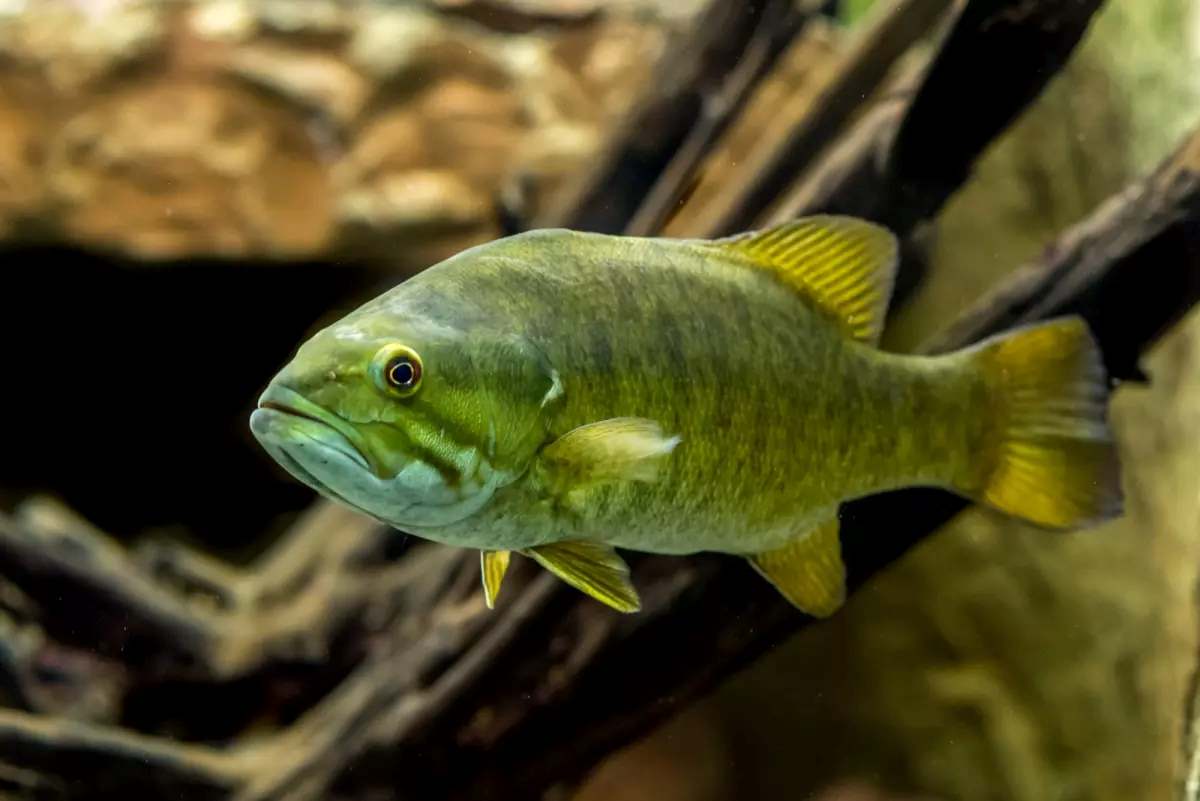
Smallmouth bass, by Brett Billings of the U.S. Fish and Wildlife Service
The Bureau of Reclamation has released the Glen Canyon Dam Long-Term Experimental and Management Plan Final Supplemental Environmental Impact Statement that analyzes various flow options from Glen Canyon Dam to prevent the expansion of nonnative fish, primarily smallmouth bass. This document supplements the 2016 Long-Term Experimental and Management Plan Final Environmental Impact Statement and Record of Decision.
The proposed updates to the 2016 plan are in response to the increasing numbers of smallmouth bass in the river below the dam. These increased numbers include indicators of spawning.
As Lake Powell’s elevation has declined, the warmest, top-most layer of the reservoir, where these nonnative, warmwater fish reside, has become closer to the dam’s water intakes. As a result, these predatory fish are more likely to pass through the dam and into the Colorado River. Additionally, when this warmer water is discharged from the dam downriver, it increases the water temperature of the river, creating ideal spawning conditions for these nonnative, warmwater fish.
A smallmouth bass population in the Colorado River below the dam poses a significant risk to the federally threatened humpback chub.
“We still have time to prevent smallmouth bass from becoming fully established below the dam, but that’s only if we have a variety of tools available to us,” said Reclamation Upper Colorado Basin Regional Director Wayne Pullan. “Recognizing the ecological threat that smallmouth bass pose on the Colorado River downstream of Glen Canyon Dam, it is important that we have the ability, by adjusting the timing and other features of flows from the dam, to disrupt the smallmouth bass spawning this season.”
Reclamation analyzed a range of reservoir releases with varying combinations of temperature and release volumes to assess their effectiveness in disrupting smallmouth bass spawning and preventing current populations from expanding.
Preferred Alternative
Reclamation identified the Cool Mix option as the Preferred Alternative. The actual selection of an alternative for implementation will not occur until the Record of Decision is signed. If needed, the selected alternative would be activated only when the average observed daily water temperatures, measured at river mile 61, exceed 60˚F for three consecutive days.
High-Flow Experiments
The document also includes potential modification of the protocol for conducting high-flow experiment releases, specifically adjusting sediment accounting periods and implementation windows. A high-flow experiment is a special release of water from Glen Canyon Dam that involves the powerplant and river outlet works to create high flows and water velocities that will suspend the sediment stored on the river bottom and transport it downstream to be deposited as sand beaches for riparian habitat, recreation campsites, and protection of cultural resources.
River Outlet Works
The flow options considered in the final document incorporate Reclamation’s recent interim operating guidance for Glen Canyon Dam. The interim guidance includes reduced capacities for the dam’s river outlet works when Lake Powell’s elevation is at or below elevation 3,550 feet. Reclamation’s recent most probable projections show Lake Powell staying above 3,550 feet through April 2026.