






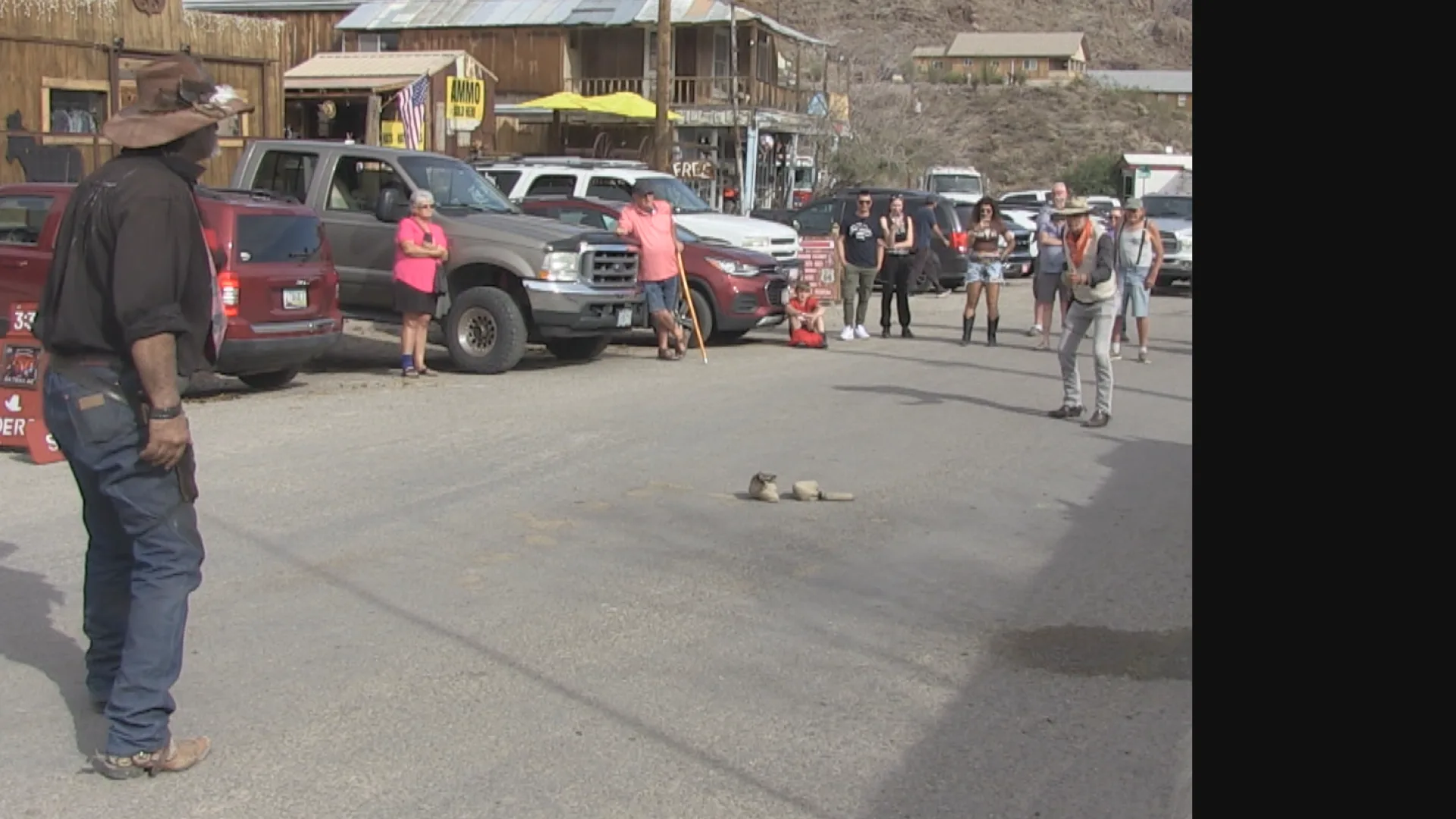
OATMAN – The wild west town of Oatman—now a visitor destination—has a fascinating history. Although native Americans inhabited the area, Anglo history dates back to 1863 when prospector John Thomas Moss discovered gold. He staked two claims, one named for himself, and the other named for Olive Oatman. Olive was a young girl from Illinois whose story was well known in the area as being captured by a native American tribe during her pioneer family’s massacre while on their journey westward.
After five years in captivity, Olive was repatriated into Caucasian society and actually graduated from the University of the Pacific. Still retaining the tribal facial markings of her captors, Ms. Oatman went onto lecture about her experiences. She passed away in Sherman, Texas in 1903 at the age of 65.
The another distinction for the city that bore her name is the connection to Hwy. 66, commonly known as Route 66. That Chicago, Illinois to Santa Monica, California designation happened in 1926, making its centennial right around the corner.

The rise and fall of the gold mining operations, explains the fortunes of the community of Oatman. The approximate value of gold in today’s dollars extracted from the area is over $725,000,000 with the production rise and fall accounting for the population peaking at around 3,500 to the approximately 102 people living there today.
Burros were used for transporting the ore in the mines, both below and above ground. When the gold mining operations were suspended as of 1941, the burros were left to fend for themselves. Those above ground survived to form a herd that is fed by visitors from shop owners selling grain based biscuits. The carrots that were sold years ago turned out to have too much sugar, causing illness in the herd and female burros to miscarry their foals.
In the old days, being a wild west environment, disputes sometimes were settled with guns. Jail did not seem to be a concern with the angry combatants who reportedly faced off on the city’s streets. In these modern times, actors stage bullet-free gun fights several times a day to entertain the over one million annual visitors making Oatman one of the more popular Route 66 stops.