






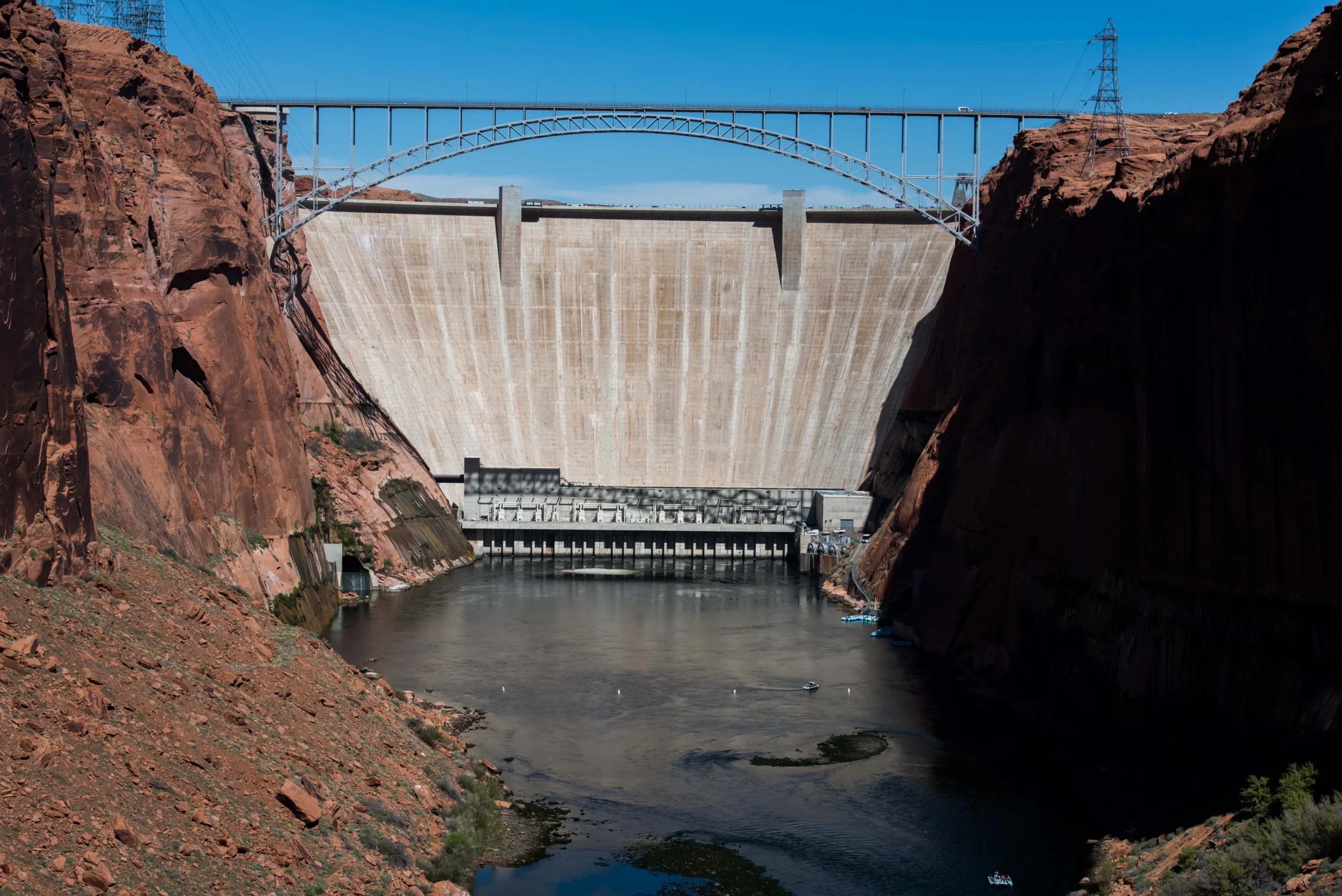
Glen Canyon Dam
PAGE, ARIZ. – As a result of warmer river temperatures, the Bureau of Reclamation began releasing deeper, and therefore, colder water on Tuesday, July 9 from Lake Powell through Glen Canyon Dam to disrupt the establishment of smallmouth bass, which could negatively affect populations of threatened humpback chub below the dam. The need for these flows was triggered after the average observed daily water temperatures reached smallmouth bass reproduction thresholds above 15.5 degrees Celsius (60 degrees Fahrenheit) at the confluence of the Colorado River with the Little Colorado River.
“The most healthy and vibrant populations of humpback chub are found in the stretch of the Colorado River downstream of Glen Canyon Dam that runs through the Grand Canyon,” said Reclamation Upper Colorado River Basin Regional Director Wayne Pullan. “We have a great interest and commitment to preserving our progress in recovering the humpback chub and protecting all native fish species within the Grand Canyon. And this summer, by using these cooler flows, we have our best operational chance to achieve these goals.”
The ‘cool mix flow’ consists of releasing water from the hydropower penstocks as well as the river outlet works. The river outlet works are approximately 100 feet below the penstocks and can release cooler water downstream. This ‘cool mix’ approach was the selected alternative in the recently signed Record of Decision for the Glen Canyon Dam Long-Term Experimental and Management Plan Final Supplemental Environmental Impact Statement.
The declining elevation of Lake Powell in recent years has led to the release of warmer water from Glen Canyon Dam. Invasive fish, such as smallmouth bass, residing in the upper layer of Lake Powell, are now more likely to pass through the dam and spawn downstream in the Grand Canyon. If left unchecked, they could continue to expand their population. Smallmouth bass are known to prey on native fish species in the Grand Canyon that are protected by the Endangered Species Act.
These actions will not impact water deliveries, and Reclamation will continue to work closely with the Western Area Power Administration to minimize the impacts of reduced power generation to customers by adjusting the timing of these releases from the dam. Reclamation will also continue to work with its partners to develop and implement additional preventative actions to combat non-native species in the Colorado River.
To learn more about the releases from Glen Canyon Dam and the Long-Term Experimental and Management Plan Final Supplemental Environmental Impact Statement, please visit https://www.usbr.gov/uc/progact/amp/index.html.