



Dear Editor,
At the January 13, 2026 Kingman City Council work session, residents were told they were witnessing a “strategic plan.” What they actually saw was something very different: a list of vague intentions, no timelines, no costs, no accountability, and no clear answers about how the city intends to pay for the growth it continues to approve. That, should concern every taxpayer.
In December 2025, the City Council held a strategic planning retreat for 2026. A month later, when asked simple, reasonable questions, Who, is responsible? When do projects start? When do they finish? How much do they cost? Where does the money come from? The city manager deflected. We heard about “process,” “core values,” and “intent,” but not about execution or specific accountability.
Leadership without accountability is not leadership. Nowhere was this clearer than in the discussion about infrastructure.
We were told Flying Fortress will cost approximately $60 million and is projected to be completed by August 2026. The city does not have that money; there are only six months remaining before August and they don’t even have a source for funding yet. It will not happen, and who would like to wager that the Council and Mayor will claim that they must raise taxes on the people to pay for it? We were also told the city is nearly maxed out on bonding capacity and that tax increases might be needed to expand it.
Yet growth projects continue to be approved without secured and funding, without water certainty, and without a realistic plan to pay for the long-term maintenance those projects require. That is not strategic planning. That is gambling with other people’s money. Our money.
At the same meeting, council members openly acknowledged that the city does not have sufficient funds to fix deteriorating water lines. The obvious follow-up question, “Why not?” went unanswered. Funds that were once protected for infrastructure were exposed by repealed safeguards (City Policy 2-24 on September 16, 2025 by City Ordinance 1983), and no replacement protections were put in place. This is not a revenue failure. It is a management discipline failure.
Meanwhile, residents are being conditioned to accept higher taxes and fees as “necessary.” Necessary because growth has outpaced infrastructure. Necessary because reserves are insufficient. Necessary because prior voter-approved controls were repealed to give “the City” more flexibility. But who is “the City”? Is it the seven people on the dais, or the tens of thousands of families who built Kingman, pay the taxes, and live with the consequences of these decisions?
Repealing voter protections may have been legally defensible, but it was morally wrong. When 62% of voters approve financial safeguards, leadership should treat that as a mandate for caution, not an obstacle to be removed. The correct response was not “we can legally do this,” but “let’s ask the people again before we do.” Instead, residents were cut out of the process.
The pattern has become increasingly clear. Uncontrolled residential and industrial growth is approved first. Infrastructure strain follows. Then tax increases on the citizens are proposed to “fix” the problem that irresponsible growth created. This approach mirrors a familiar tactic in government: create demand through expansion, then use that demand to justify higher spending and fewer voter controls.
It doesn’t have to be this way. Kingman needs a different governing approach, one grounded in accountability, spending control, and respect for the people who pay the bills. Kingman’s budget is $75 Million. Doc Berry has been on the Board of Directors of a $256 Million Corporation for the last ten years and has the leadership experience and discipline to implement these solutions.
Here is what that looks like:
First, every major project must have a named owner, a council sponsor, a defined start and end date, a cost ceiling, and a clearly identified funding source. Monthly public reporting should be mandatory. No more hiding behind terms like “staff” and “we.” Name the specific individual who is accountable. Where does the “Buck” stop?
Second, growth must pay its own way. Data centers should cover their water, power, and infrastructure impacts. Corporate-owned short-term rentals should be taxed differently than owner-occupied homes. Residents should not subsidize industries that can afford to pay their true cost of service.
Third, infrastructure funds must be protected. Money designated for water, wastewater, and roads should not be repurposed without strong safeguards and supermajority approval. Infrastructure dollars are not a general-purpose slush-fund.
Fourth, unfunded expansion must stop. No new development approvals unless water capacity is secured first, road impacts are funded first, and long-term maintenance costs are disclosed upfront.
Fifth, taxes on the citizens should be the last resort, not the first. Before raising taxes, the city must exhaust private capital options, public-private partnerships, land monetization strategies, and internal reprioritization. Families balance their budgets every month. City Hall should be expected to do the same.
Finally, community engagement must be real. Putting “public engagement” on an agenda without discussion insults the public. Kingman residents don’t need more buzzwords, they need honest answers and a seat at the table.
Kingman does not have a revenue problem. It has a spending problem. It has a prioritization problem. And most of all, it has an accountability, management, and leadership problem.
Those problems are fixable, but only if leadership is willing to change course, respect voters, and govern with the same discipline expected of the people they represent.
Growth alone is not success. Process alone is not leadership. Results…responsibly achieved…are what matter.
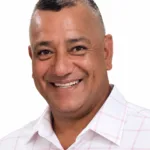
Mark “Doc” Berry
Candidate for Mayor
Kingman, AZ