






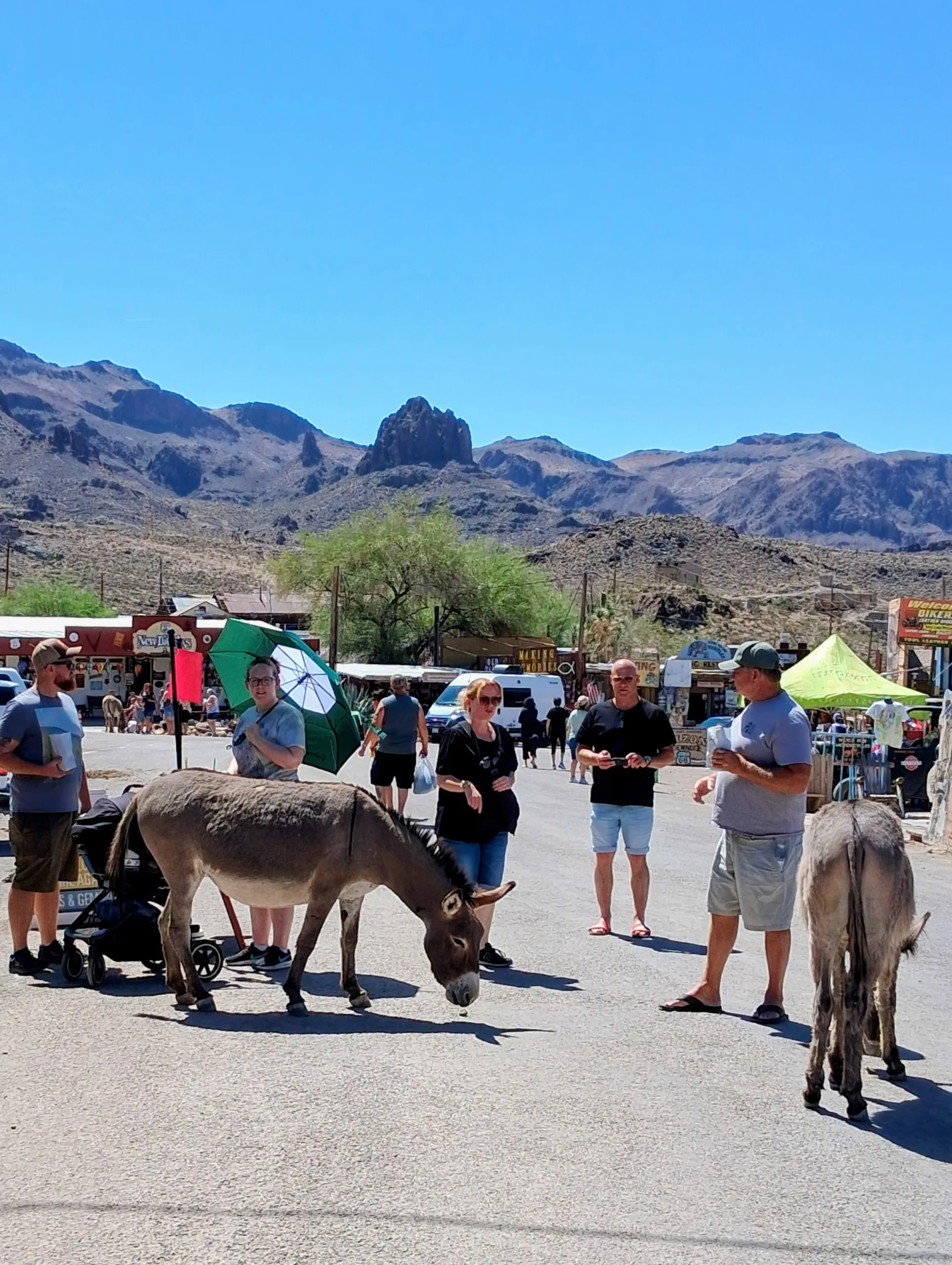
OATMAN – Oatman, known as the “Living Ghost Town,” lies 2,710 feet above sea level atop the Black Mountains on old historic Route 66, and is home to more burros than humans.
The town was named in honor of 14-year-old Olive Oatman, who was traveling with her family from Illinois to California when attacked by a band of Indians. Her parents and four siblings were killed, her brother, Lorenzo, left for dead and Olive and her sister Mary Ann were captured by the Indians and made slaves.
In 1856, after five years in captivity, the Indians traded the girls to the Mohave Indians at Fort Yuma for blankets, beads and a white horse. The girls were then reunited with their brother, who had survived. Rev. Royal Stratton wrote Olive’s biography, and her name became legendary in the area.
John Moss discovered gold in the Black Mountains in 1863 and staked many claims. One he named Oatman, after Olive.
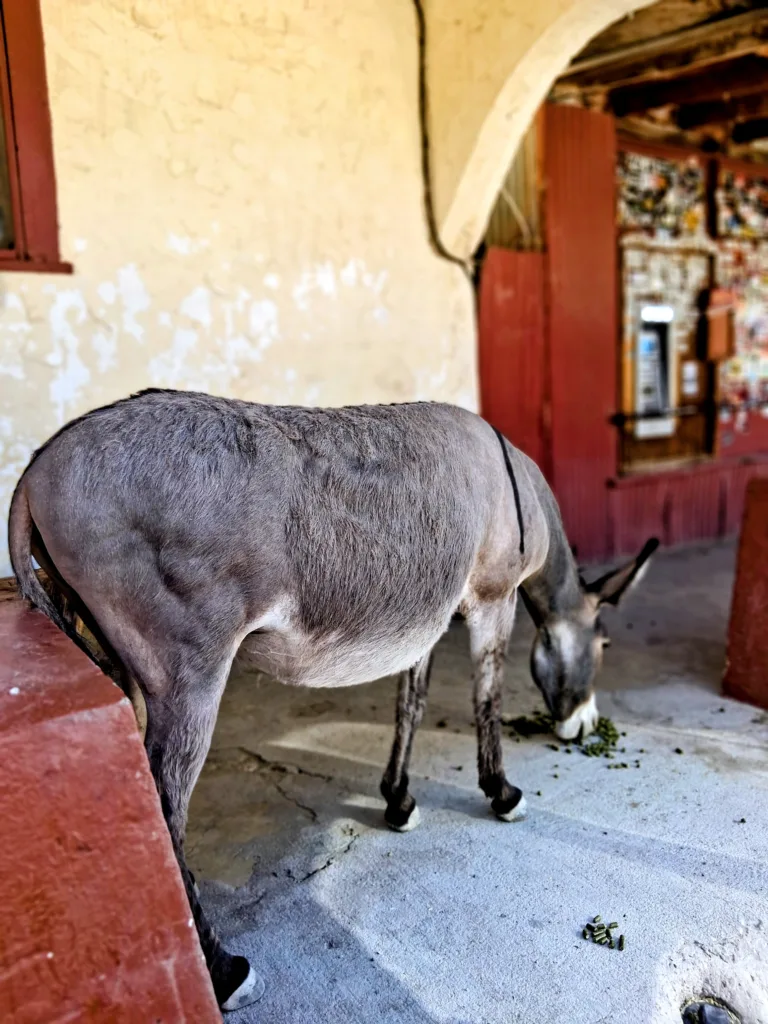
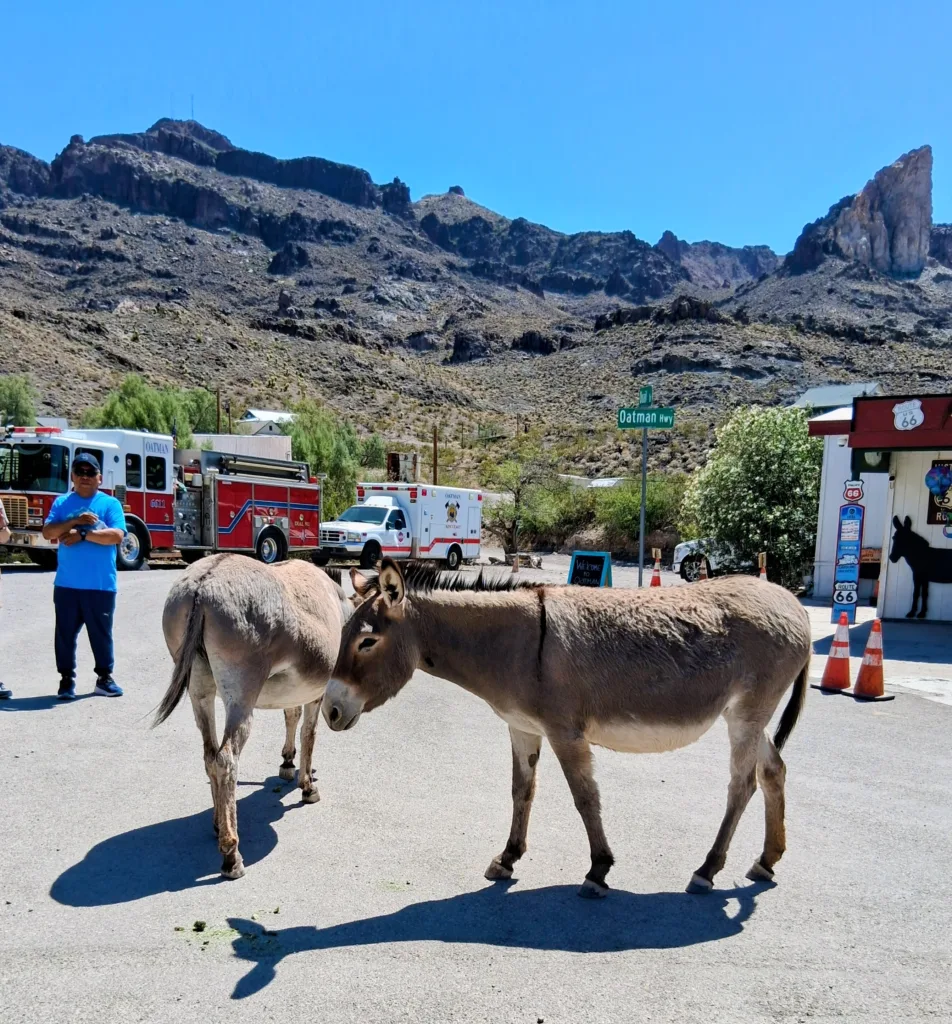
Between 74 and 89 humans live year-round in Oatman, but the burros – descendants of gold mining prospectors who set them free when World War II shut the mines down – outnumber them by far. Several burros wander down from the mountains every morning to be fed by the 500,000 visitors to Oatman each year. They own the streets of Oatman.
Connie “Ceejay” Jones