





PHOENIX – The federal grazing fee for 2026, as calculated by the National Agricultural Statistics Service, is $1.69 per animal unit month for lands administered by the Bureau of Land Management and the U.S. Department of Agriculture Forest Service.
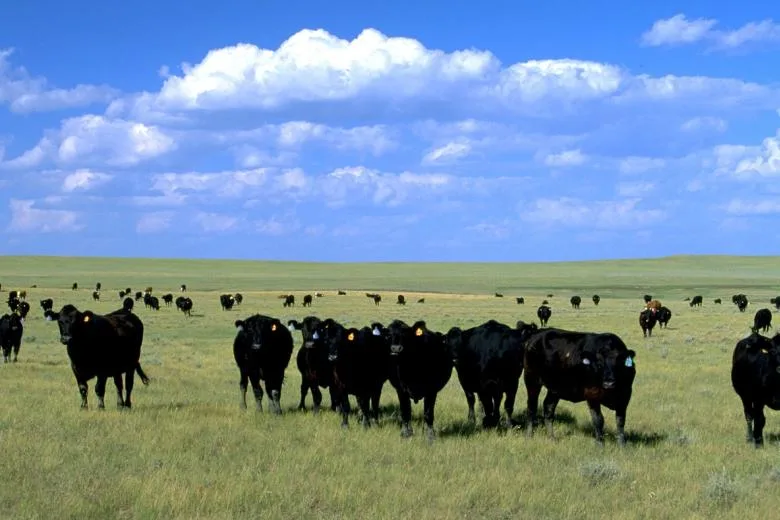
An animal unit month or head month — treated as equivalent measures for fee purposes — is the use of public lands by one cow and her calf, one horse, or five sheep or goats for a month. The newly calculated grazing fee takes effect March 1, 2026. The fee will apply to nearly 18,000 grazing permits and leases administered by BLM and nearly 5,550 permits administered by the Forest Service.
The formula used for calculating the grazing fee was established by Congress in the 1978 Public Rangelands Improvement Act and has remained in use under a 1986 presidential Executive Order. Under that order, the grazing fee cannot fall below $1.35 per animal unit month/head month, and any increase or decrease cannot exceed 25% of the previous year’s level.
The annually determined grazing fee is established using a 1966 base value of $1.23 per animal unit month/head month for livestock grazing on public lands in Western states. The figure is then calculated according to three factors: current private grazing land lease rates, beef cattle prices, and the cost of livestock production. In effect, the fee rises, falls, or stays the same based on market conditions.
BLM and Forest Service are committed to strong relationships with the ranching community and work closely with permittees to ensure public rangelands remain healthy, productive working landscapes. The grazing fee applies in 16 Western states on public lands administered by BLM and the Forest Service.
Permit holders and lessees may contact their local BLM or Forest Service office for additional information.