






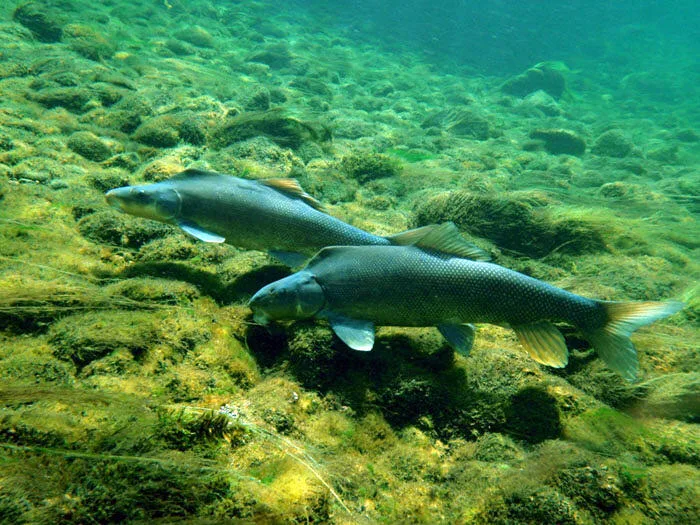
BOULDER CITY, Nev. — The annual effort to harvest razorback suckers (Xyrauchen texanus) from lakeside rearing ponds will coincide with the planned lowering of water levels in Lake Mohave. The Bureau of Reclamation lowers water levels each year at this time to prepare for the potential inflow from winter storms below Hoover Dam.
Lake Mohave will steadily lower from its current elevation of 642.50 feet above mean sea level to an elevation of about 637 feet msl by October 5, where it will remain for one week. The lake level will begin to rise after October 12 and is projected to reach an elevation of about 638 feet msl by the end of October.
Boaters should use caution when navigating the lake, as areas, especially downstream of Hoover Dam, will be shallower than normal.
Razorback suckers are an endangered species native to the Colorado River, and the drawdown makes it easier for the Lower Colorado River Multi-Species Conservation Program to gather tens of thousands of newly hatched razorback sucker larvae from the lake.
The program, administered by Reclamation, transfers the larvae to state and federal hatcheries throughout the Southwest. After an initial growth period in these hatcheries, many of the fish are placed in lakeside rearing ponds around Lake Mohave, where they continue to grow and learn how to forage for food. In the fall, these fish are harvested from the lakeside ponds, tagged with microchips, and released back into Lake Mohave.
The project is part of an annual effort that includes Reclamation, the U.S. Fish and Wildlife Service, National Park Service, Arizona Game and Fish Department, Nevada Department of Wildlife, and others. The program is a multi-agency effort to accommodate water and power needs while conserving species and their habitats along the river. More information about conservation efforts for razorback suckers is available at https://lcrmscp.gov/activities/species-Razorback-Sucker?id=37877.