






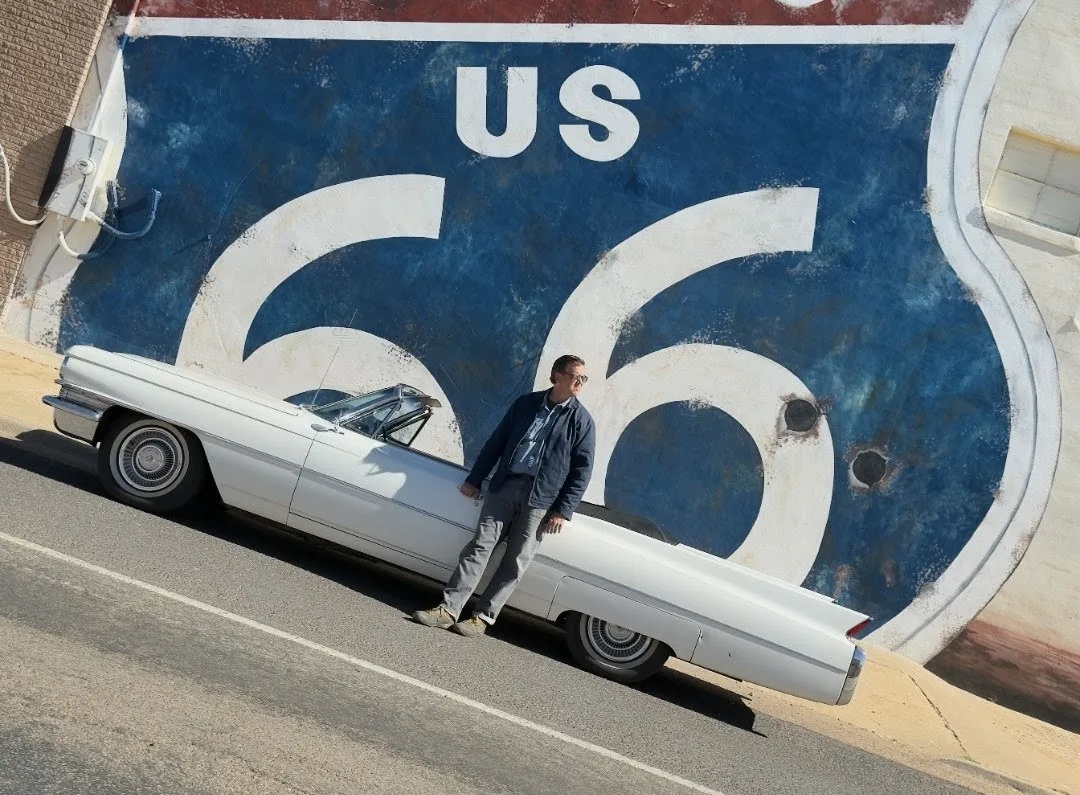
KINGMAN, Ariz. – The screening of filmmaker John Paget’s Route 66: The Main Street of America two-hour documentary was shown Thursday evening, Oct. 15, to a sold-out Beale Street Theater crowd.
After a special performance by Bentenya from Japan, Kingman Mayor Ken Watkins introduced award-winning filmmaker John Paget, who told of his first adventures on the Mother Road.
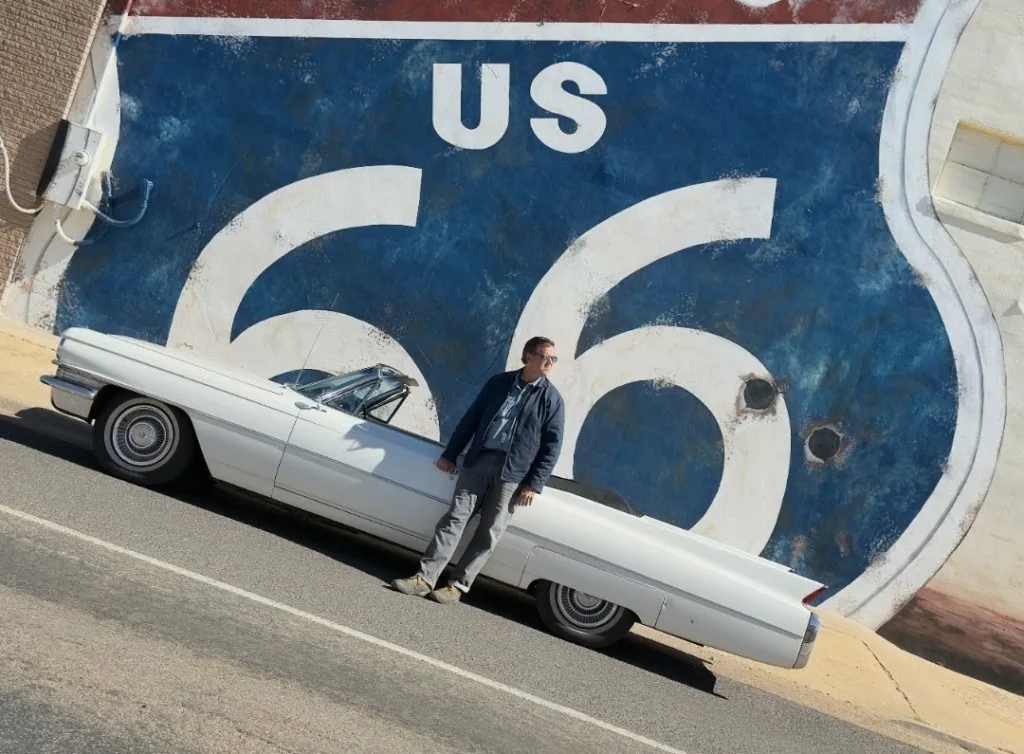
“In 1994 I strapped a camera to an old 1963 Cadillac. That was the first of multiple cross-country trips,” Paget stated. He said he started filming two years ago, got enough film for a seven-hour series, and this two-hour director’s cut includes all his Arizona stories.
Route 66, authorized Nov. 11, 1926 to run through eight states from Chicago, IL, to the California west coast, was an unpaved, dirt and gravel, sometimes wooden-boards road.

In John Steinbeck’s 1939 novel, The Grapes of Wrath, the phrase “Mother Road” was coined by the author when he wrote about Route 66. It was the road used to escape the Dust Bowl, drought and economic hardships of Oklahoma and the Midwest as they moved toward California, land of new dreams.
Paget filmed in all eight states – Illinois, Missouri, Kansas, Oklahoma, Texas, New Mexico, Arizona and California.
Audience response was positive. “I was expecting the usual,” said Bob Boze Bell from True West Magazine. “It was so far beyond that. The stories of the pie lady and angel and the music was spectacular, all genres from rock and roll to big band.”
Brian Geffre, who was traveling through Kingman said, “It pointed out the historical significance. It was so nice to see all the aerial views because when we’re driving on it, we can’t see that.”
Riley Ferry said it made him cry a couple of times. “The lemon meringue pie story and angel talking about his brother made me cry.”
“It was another amazing history of Rt. 66,” said Watkins. “Now I want to go visit all the sites on Rt. 66.”
Paget said the future of the documentary looks good. Next, he will be screening it in the Los Angeles Theatre, the same theater Charlie Chaplain screened his famous silent movie “City Lights” in 1931.
After that, he’s expecting it to be on DVD and Blu-Ray. He’s already been given the nod to release the documentary’s soundtrack.
The documentary was mixed with humor and serious stories from those on Rt. 66 who struggled to survive when I-40 caused the death of the Mother Road, the Main Street of America.
Mohave County Historical Society Director Leah Stagg, “It’s the road we take to work, the road to go to school. It’s a part of who we are.”
Will it survive another 100 years? “It must!” Paget said.