






PHOENIX — Democratic candidates swept in Arizona’s midterm elections on Tuesday, Nov. 3, and some Republicans are placing the blame on Turning Point. The political organization founded by the late Charlie Kirk went all-in to flip the leadership of its home state, and now faces questions.
Former state Republican Party chair Gina Swoboda says that Turning Point Action (TPA) hurt the GOP slate in Arizona.
“I think Turning Point Action killed the party,” she said in an interview with AZFamily last week. “Turning Point Action is the reason we are where we are as a state party.”
A day after the election, Swoboda appeared on KTAR’s radio program, where she urged Republicans to reconsider their approach.
“I don’t know how many times the voters of Arizona have to say no. No, we do not want Turning Point,” she said.
Swoboda is among a growing list of disappointed Republicans who believe organizations like TPA pushed candidates who embraced election denialism and conspiracy theories, which lead to this year’s crushing defeat.
Maricopa County Supervisor Thomas Galvin took a moment Wednesday, Nov. 4, to address his colleagues and the public about this concern.
“Arizona needs to move on from this cyber-ninjas era and my fellow Republicans need to stop lying about allegations and conspiracy theories about election fraud,” he said at the meeting. “It wasn’t just swing voters, it was Republican voters who are just sick and tired of this.”
Other indicators suggest that Arizona voters did indeed care more about things like election integrity compared to the rest of the country.
According to a new AP voter poll, voters at the national level cited the economy (39%) as the number one issue, followed by “the state of democracy” (33%) in second place. However, the data for Arizona voters in the same poll showed “the state of democracy” as the top issue for 36% of Arizona voters, followed by the economy (33%), immigration (16%), and healthcare (7%).
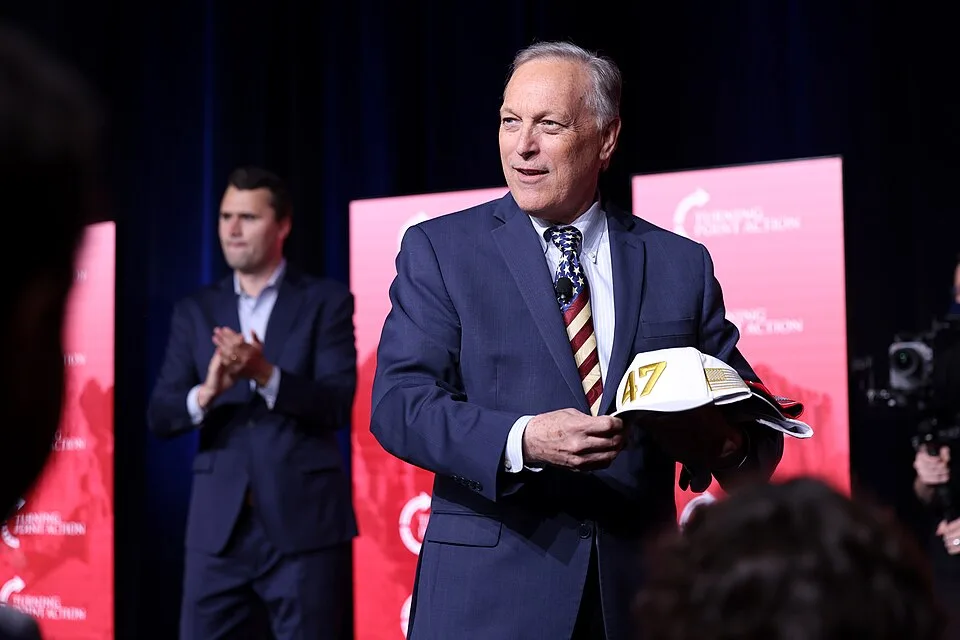
Last month, Arizona Republic reported that Trump-endorsed Andy Biggs was personally recruited by the late Charlie Kirk. Turning Point then spent $18 million to elect Biggs—the most money the organization spent on a candidate this cycle.
“This is their swan song,” former Republican Rep. Matt Solomon told Politico last month. “This is kind of all-or-nothing for them.”
One Republican strategist working on multiple Arizona campaigns anonymously told Politico that Turning Point is responsible for the then-anticipated defeat.
“In all likelihood, the top statewide seats are going Democrat,” the strategist said. “And Turning Point owns it. They wanted to be the player. They wanted to be the guy. Guess what? They are.”
Turning Point CEO Erika Kirk addressed the election losses in a post on X, reaffirming the organization’s underlying vision, but without explaining the cause of the defeat.
“We are going to listen, study the results, and spend the next two years making the case for how conservative, free market solutions, and a renewed focus on our country’s founding principles can address the problems the American people face,” she wrote in the post.
On the issue of accountability, Kirk was evasive.
“The biggest mistake conservatives can make right now would be to allow this moment to become another exercise in finger-pointing, in-fighting, or trying to secure their own political preservation,” she said.
Nearly every TPA-endorsed candidate in Arizona lost on Tuesday, with one exception being Heather Rooks who was re-elected to the board for Peoria Unified School District. Rooks was voted to be school board president in January, but was later removed from that role during a dispute about how to best handle a sexual misconduct investigation at a Peoria high school.
Among those endorsed by TPA this year were gubernatorial candidate Andy Biggs and Attorney General candidate Warren Petersen, who both lost by double digit margins on Tuesday. Superintendent of Public Instruction candidate Kimberly Yee lost to her Democratic opponent by more than 6 points. U.S. House candidates Juan Ciscomani and Jay Feely also lost by wide margins.