






MOHAVE COUNTY – Criminal cases involving the sexual exploitation of children are heard at the Mohave County Law and Justice Center and courtrooms all across the country with disturbing frequency.
Law enforcement authorities today use the term Child Sexual Abuse Material (CSAM) for what many previously labeled as “child pornography,’’ preceded by “kiddie porn.”
Child molestation and sexual abuse charges arise when children are physically touched, while sexual exploitation of a minor criminal counts usually involve images or videos of unknown children engaged in sexually suggestive or active behavior.
Members of the local legal community don’t think CSAM involvement is skyrocketing. They instead believe that law enforcement benefits from better technology to track and document the downloading and sharing of such content.
“I think it’s always been here, it just wasn’t as easily detected,” said deputy Kingman police chief Joel Freed. “Back in the day, 35 to 40 years ago, they would actually send physical images through the mail.”
Much of today’s CSAM is exchanged through computers and cell phones, leaving electronic trails that can be detected by communication service providers and legal authorities.
“It’s more a matter of starting to have the tools to investigate these, whereas before people just got away with it,” said county attorney Matt Smith. “This stuff’s been going on I’m sure for a long time and in a much more prolific rate that anybody was aware of and so we started getting more tech savvy.”
Public Defender Paul Amann agreed with Smith’s assessment that police and prosecutors are more aggressive and proactive in the CSAM enforcement arena.
“I think law enforcement is more fixated on it now,” Amann said. “I think they realize that these are serious cases and serious crimes, so they’re making a stronger effort to prosecute them.”
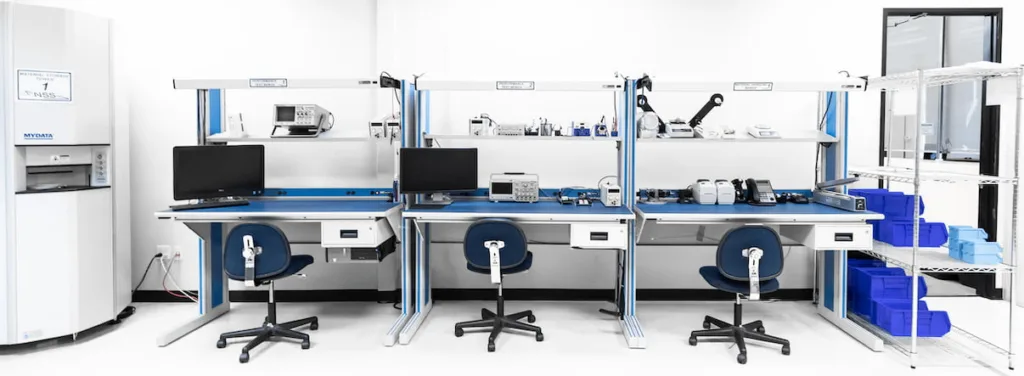
Mohave County Sheriff Detective Michael Angelo late last year was honored by the Arizona Sheriff’s Association with the Innovation of the Year award for his “new methods and sophisticated frameworks that have dramatically improved our ability to identify child predators, secure digital evidence, and ultimately bringing justice,” a recent news release said. “Detective Angelo has built a computer forensics lab that is equipped with the latest and greatest technology, all purchased with funds seized under the RICO Act.”
Angelo was credited with investigation and arrests in 19 CSAM cases over the past year.
Tough sentencing law in Arizona mandates a 10- to 24-year prison term for each conviction for sexual exploitation of a minor. Convictions must be served in consecutive, rather than concurrent fashion and sentences must be served in full, or day-for-day, rather than 85%.
Officers with local law enforcement agencies commonly charge 10 counts of sexual exploitation of a minor, even though they could file dozens or scores of charges as cases typically involve possession of hundreds of images or videos.
Prosecutors and defense attorneys in Mohave County step around what would essentially be life-long prison terms pleading cases down to two convictions reduced to attempted sexual exploitation of a minor. The practice commonly results in a five-year prison term, with a “probation tail.”
These plea deals provide opportunity for extended, if not lifelong monitoring and supervision of defendants. They also serve as a mechanism to allow judges to avoid sending child porn purveyors to prison for longer periods of time than criminal cases involving murder.
Amann said many defendants are unaware of the harsh consequences and punishment since they don’t know the victims and didn’t touch anyone.
“A huge problem in Arizona and everywhere throughout the country is a lot of people don’t understand the gravity of this crime,” Amann said. “I think there needs to be better education. There needs to be better advertisement to the public of the fact that this is a really serious crime. It’s really easy to commit. You can do this in the comfort of your home with a few clicks on your computer and maybe not ever realize how horrible the consequences may be.”
The proliferation of electronic devices and the explosion of social media create an environment that makes it all too easy to connect with the industry producing Child Sexual Abuse Material.
“That is absolutely true. Anybody can find it,” Smith said. “Of course there’s always been a market for it, but now maybe people before that were interested but didn’t have to ability to access it can now access it.”
“I don’t think it’s going to get any better,” agreed Freed. “That’s the unfortunate thing. It’s only going to get worse.”
Dave Hawkins