






LAKE HAVASU CITY – Mohave County was notified by the Arizona Department of Environmental Quality (ADEQ) in mid-December of multiple Harmful Algal Blooms (HABs) in Lake Havasu, as reported by the Bureau of Reclamation (BOR). These blooms were discovered during BOR’s quarterly monitoring trip on December 3, 2024. The BOR collected samples which were sent for testing to determine toxicity.
Testing results received this week revealed non-detectable or very low levels of algal toxins at the time of sampling. The BOR reported that while the concentration of phytoplankton was a little high for this time of year, it was not unusual compared with other measurements over the last decade.
The BOR also mentioned that because the samples taken were in open water locations, the sites being routinely sampled may be missing the most problematic areas around the lake. It has been observed that algal toxins tend to be highest in sheltered coves, beaches, and boat ramps.
Individuals are asked to continue to stay aware of the potential for more abundant HABs in these types of areas.
HABs form when algae, a naturally occurring aquatic organism, grow rapidly in a short amount of time. HABs can appear in water as pea soup or spilled green paint, discoloration or streaks, surface scums, mats, or films and as green dots or globs floating below the surface.
For more information and frequently asked questions about HABs, please visit the ADEQ website at†https://www.azdeq.gov/AZHABs.
Harmful algal blooms reported in Lake Havasu
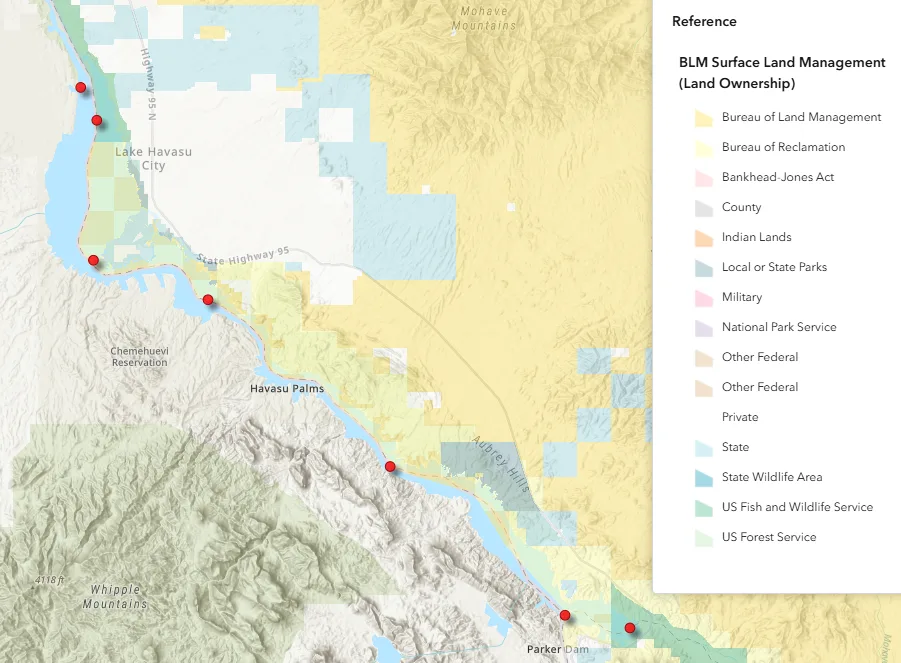 Locations of the blooms at the time sample collection are indicated by a red dot in the map below.