






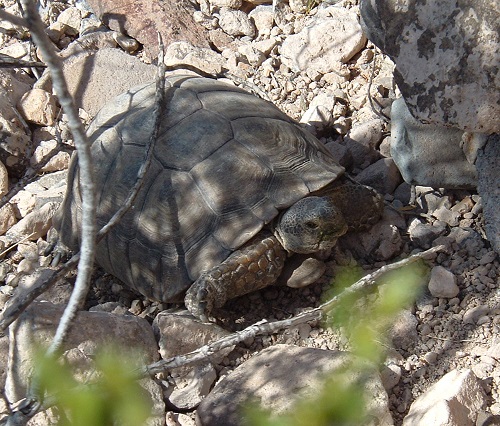
PHOENIX — Much-needed monsoon rains bring out desert wildlife in Arizona. Animals may wander in search of mates, moisture, and as a necessity to escape flooding.
Desert tortoises are one of many fascinating species encountered during the monsoon season. To that point, the Arizona Game and Fish Department (AZGFD) urges the public to follow these important guidelines:
* Keep wild desert tortoises wild. Taking a wild desert tortoise home is illegal in Arizona. Additionally, most desert tortoises stay in the same small area their entire lives. If moved to a new location, the reptile will not know where to find food and shelter, and it likely will die. Interested in adopting? Visit https://www.azgfd.com/wildlife-conservation/living-with-wildlife/.
* Don’t release a captive desert tortoise into the wild. “We cannot stress enough how detrimental it is to let a captive tortoise go free in the wild,” said Chad Rubke, AZGFD’s turtles project coordinator. “Captive desert tortoises cannot be released into the wild, as they can pass diseases to wild populations and displace wild tortoises. It is also illegal to release captive desert tortoises into the wild.”
* Keep dogs away from wild desert tortoises. Even the most gentle dog can pose a serious threat to a desert tortoise. Keeping dogs on leashes, or in fenced yards, is an effective way of reducing their encounters with desert tortoises.
* Make a call, help a tortoise. If a desert tortoise is seen crossing a busy road in a populated area, call AZGFD’s Tortoise Adoption Program hotline at 1-844-896-5730. A determination will be made whether the desert tortoise “escaped” and needs to be reunited with its owner, or surrendered to the adoption program. Those desert tortoises that have been through the adoption program often, but not always, have small tags glued to their shell with a unique identification number.
* See a desert tortoise? Let AZGFD biologists know. Email the details (time, date, place) and a photo (if one can be taken without handling the desert tortoise), to turtlesproject@azgfd.gov. “A tortoise in the road is simply trying to get to the other side, and the best thing anyone can do is to leave it in the wild,” Rubke said.
There are two species of desert tortoises in Arizona: the threatened Mojave desert tortoise, found north and west of the Colorado River; and the Sonoran desert tortoise, which is protected by AZGFD.
Desert tortoise conservation in Arizona is supported by the Heritage Fund, a voter-passed initiative that was started in 1990 to further wildlife conservation efforts in the state through Arizona Lottery ticket sales.