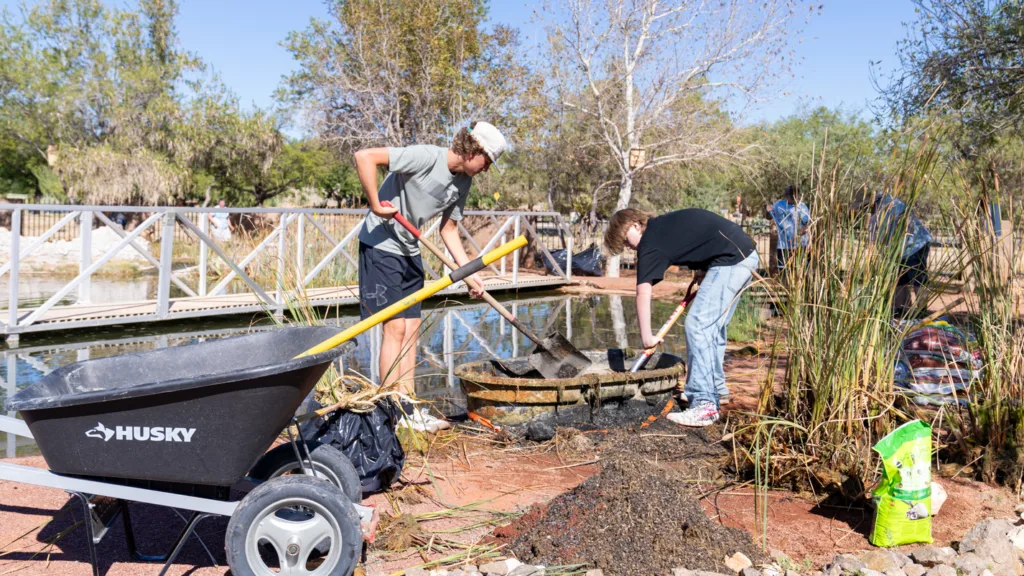






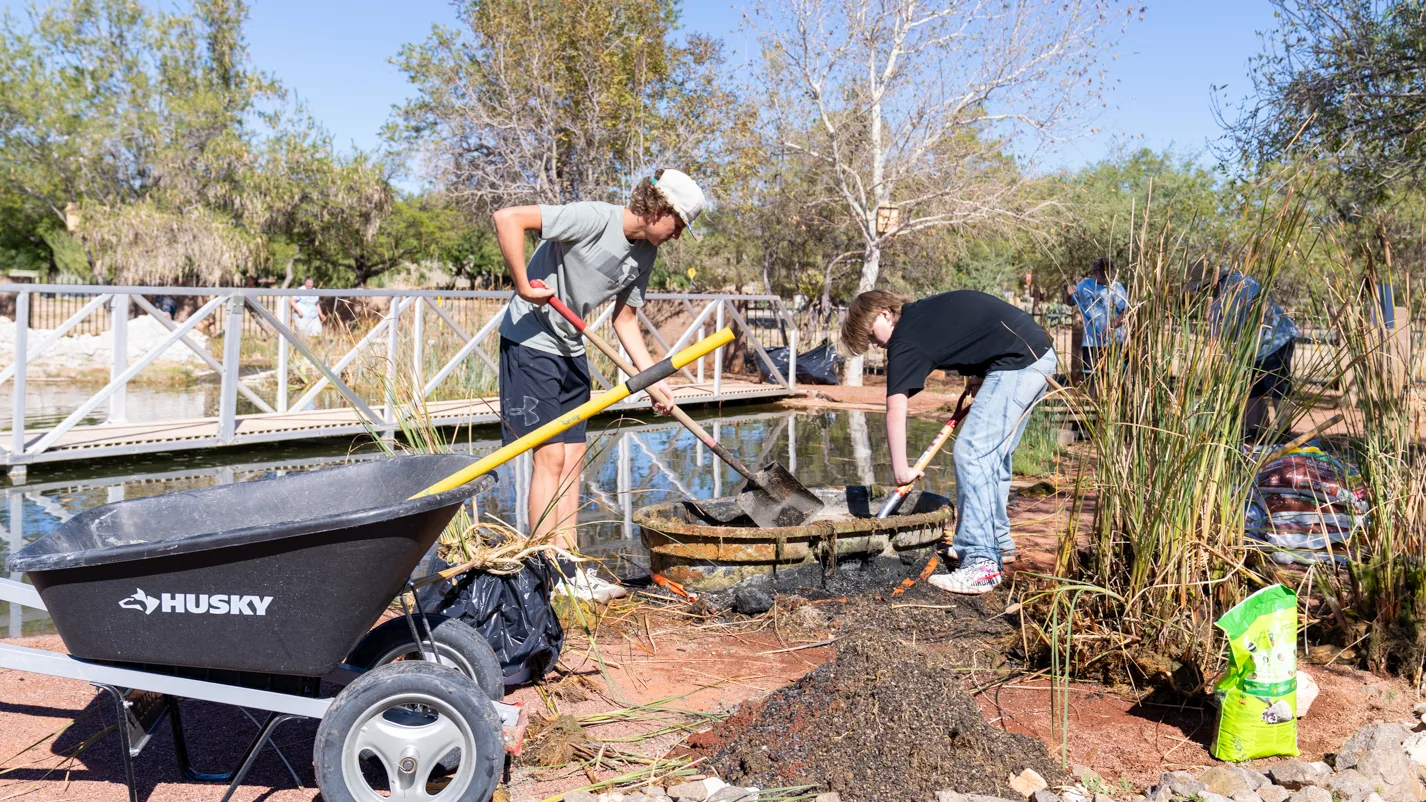
MOHAVE COUNTY – Mohave College and Tieg Masterson, Life Scout and Eagle Scout candidate, and Kingman Academy of Learning student, partnered to restore the pond, surrounding habitat, and added bat boxes at the Kingman Campus. The project was led by Masterson, with the help of Associate Dean of Arts & Sciences Dr. Tonya Jackson-Lopez. The partnership reflects Mohave College’s dedication to building strong community partnerships and making a positive difference.
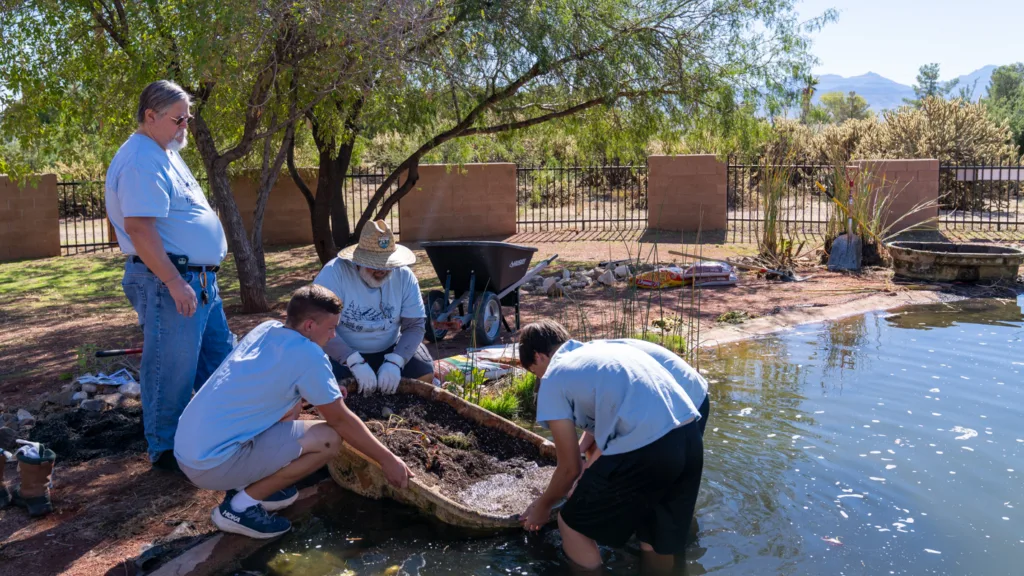
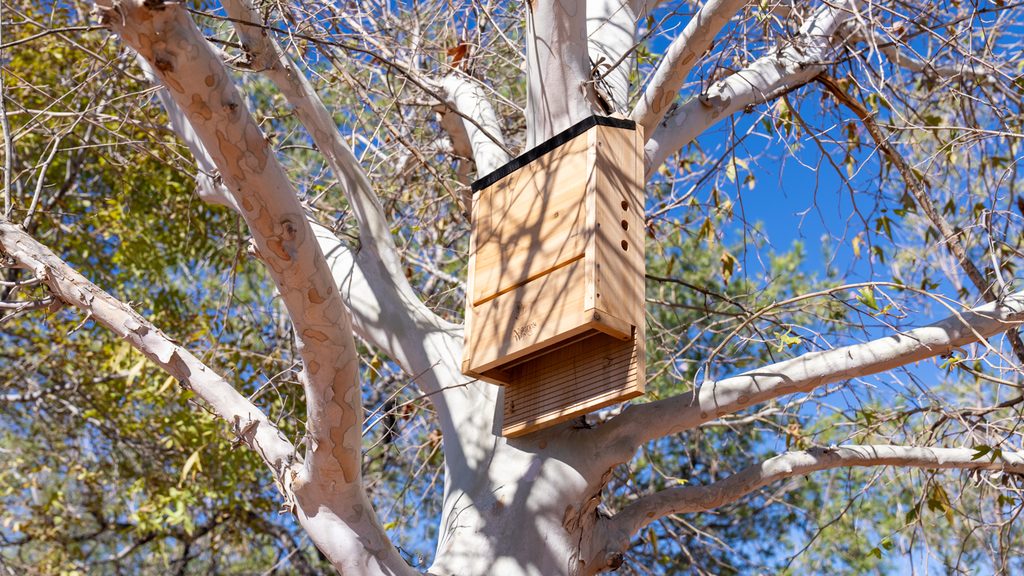
The project consisted of volunteers removing cattails, unwanted plants and algae. They also planted new plants, cleaned up the area around the pond and installed seven bat boxes. Volunteers also removed two planters from the bottom of the pond and replanted bulrush, water lilies and watercress. A total of 18 volunteers were able to help keep the pond clean and provide it a thriving environment.
Masterson decided to conduct his project at the Kingman campus pond because he enjoys science, and it provided him the opportunity to learn more about the environment and ecosystem. This service project is one of several requirements toward earning the rank of Eagle Scout.
He said the project was challenging but it provided him the opportunity to learn new things, be outside, and partner with the College and Arizona Game and Fish.
Dr. Jackson-Lopez has worked with the Troop in the past and has recently been certified to offer science-based Scout merit badges. Initiatives like this are important to preserve natural resources because it creates opportunities to educate people about species that depend on these environments, and serve as a reminder that conservation starts locally.
“Partnerships like this give young people an opportunity to engage with the College before they ever become students here, while also allowing us to support meaningful projects that benefit broader Mohave County,” said Dr. Jackson-Lopez. “I want students of all ages to see Mohave College as a place where they are welcome, where they can learn, and where they can make a difference.”
Improvements like these benefit the wildlife and ecosystem because it maintains a healthier habitat for the endangered Desert Pupfish that live in the pond and other organisms in the area. The bat boxes provide a resting space to encourage bats to use the area to help balance the ecosystem around the pond.
Masterson would like to thank Mohave College employees, Dr. Jackson-Lopez and DeWanye Partain, Facilities Management Executive Director, for their assistance. Arizona Game and Fish was also part of the project to help volunteers identify plants, wildlife, provide background information about the pond and overall ecosystem. Local business and organizations contributed to the initiative by donating bat boxes, supplies, plants, safety equipment, soil and other materials.