






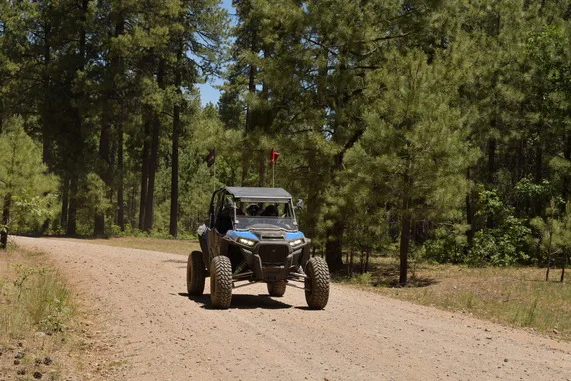
Minimizing impact on habitat is key to successful wildlife conservation
PHOENIX — As shed antler hunters begin to scour the backcountry for dropped deer and elk antlers, the Arizona Game and Fish Department (AZGFD) reminds those utilizing an off-highway vehicle (OHV) in their search to stay on roads and trails.
Just like during hunting seasons, it’s important for those using an OHV to ride safely and responsibly. This includes always wearing a helmet while operating the machine (a requirement for those under 18), wearing seatbelts if the vehicle is equipped with them, and safeguarding against habitat damage by riding on established trails. All sheds should be packed out by foot to keep habitats intact.
Many animals shed their antlers in the spring and spend the summer and fall seasons growing a new set. Shed hunters tend to begin their search in early spring and utilize OHVs to easily cover more ground. The resulting habitat damage caused by those driving off-trail can take more than 100 years to recover, especially if the area traveled is covered with snow or is muddy from snowmelt. Vehicle tracks can be seen by other users as an open invitation to unknowingly ruin habitat or a pristine recreational area.
Additionally, excessive noise can cause animals to leave their normal habitat or could startle an animal into defending its territory. Minimizing impact on habitat is key to successful wildlife conservation.
For more information about the department’s OHV program and safety course options, visit www.azgfd.gov/ohv.