






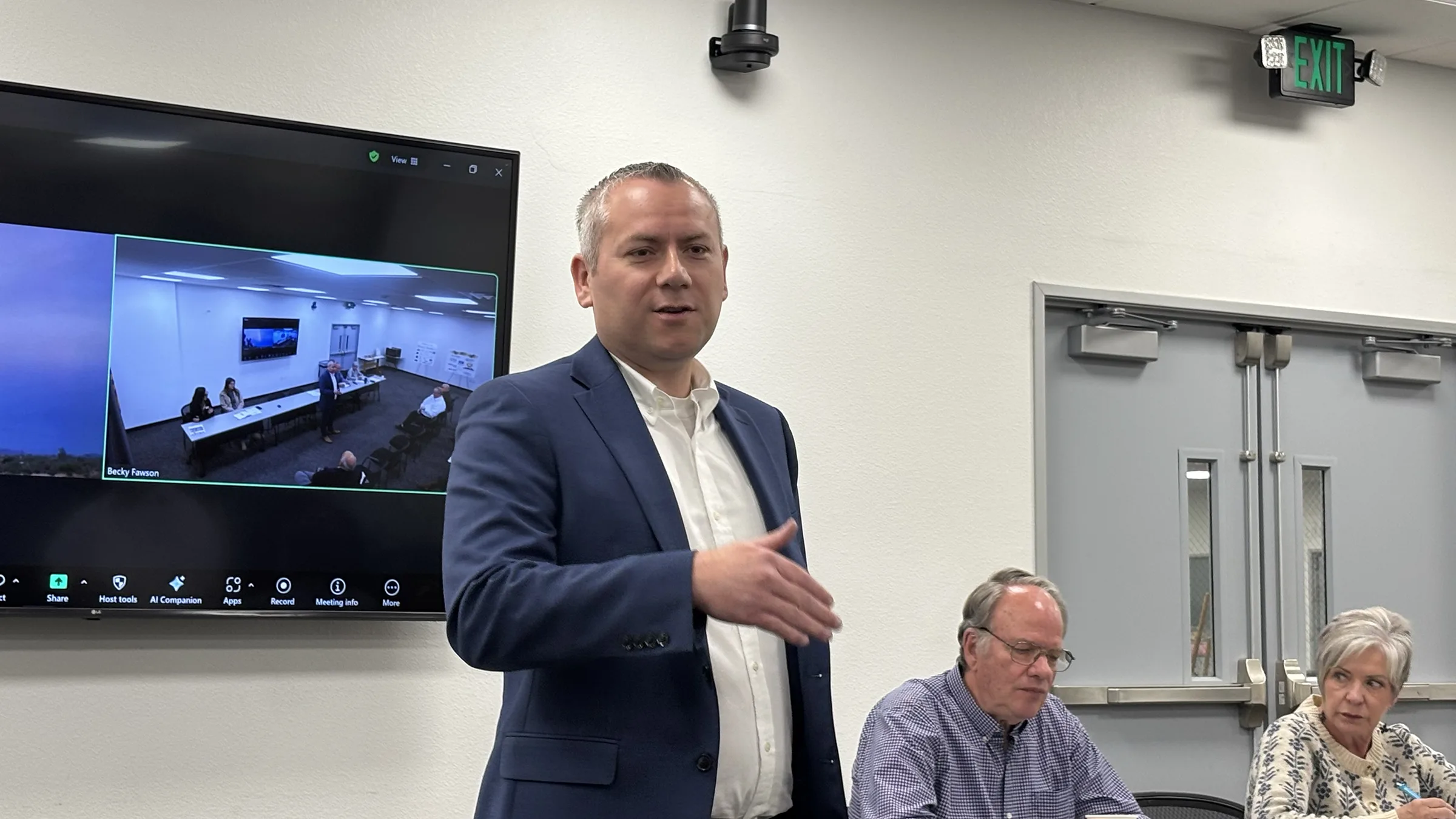
KINGMAN — Kingman Regional Medical Center (KRMC) will be facing certain financial and administrative challenges in the near future as a result of recent legislation, according to CFO Josh Hoffman. Hoffman recently explained some of these concerns at a Kingman Chamber of Commerce Business and Government Committee meeting on Thursday, January 8.
The biggest concern, Hoffman explained at the meeting, relates to a reduction in Medicaid supplemental funds that are intended to offset shortfalls whenever the cost of healthcare at the hospital exceeds what Medicaid will pay for. In Arizona, this is funded through a provider tax that the hospital pays to the state.
Hoffman says that state-directed payments help hospitals stay in the black, but they are going to be reduced over the next few years because of the reconciliation bill passed last year. This year, Arizona received $2.6 billion in supplemental Medicaid funds this way, but the 6% cap on the hospital’s net revenue will be reduced by half a percent each year.
KRMC is expected to lose $5.8 million each year—a total of around $29 million in lost revenue over five years. Mohave County is expected to lose around $10 million overall.
“It’s a massive chunk of money that a lot of the healthcare industry is struggling to understand how are we going to make up for this,” Hoffman told attendees.
Hoffman says they also expect an increase in uncompensated care—those who cannot afford care but do not qualify for Medicaid and who recently lost coverage under the Affordable Care Act. The Big Beautiful Bill also created work requirements and decreased the length of time to recertify for Medicaid from every year to every six months.
These changes greatly impact KRMC because Medicare and Medicaid represent over 70% of KRMC’s total revenue. As a locally-owned nonprofit, Hoffman argues that this will affect the community as well.
“One of the joys of working here in Kingman is that we are locally-owned and operated,” Hoffman said at the meeting. “We don’t have any headquarters anywhere else that we take these dollars that we make and sent it somewhere else. Everything that we make, everything that happens, stays here in this community.”
Hoffman also raised two other issues unrelated to the Big Beautiful Bill.
One concern involves a pilot program called the Wasteful and Inappropriate Service Reduction Model (WISeR), which the Department of Health and Human Services (HHS) is rolling out in six states, including Arizona. The program is intended to eliminate waste and fraud, but Hoffman believes the program is going about it the wrong way.
For example, certain tests and procedures under the program will now require pre-authorization to qualify for Medicare. Requirements like this will create more administrative burden for hospitals and slow down care for patients.
The other issue raised at the meeting is the 340B drug pricing program, which is changing how hospitals receive discounts from drug companies. Hospitals will now be required to pay the full price for drugs upfront and then submit a request for a rebate later.
Hoffman said that KRMC has increased its operating margin in recent years to around 4%, but it is unclear how much the extra administrative requirements will impact this margin moving forward.