





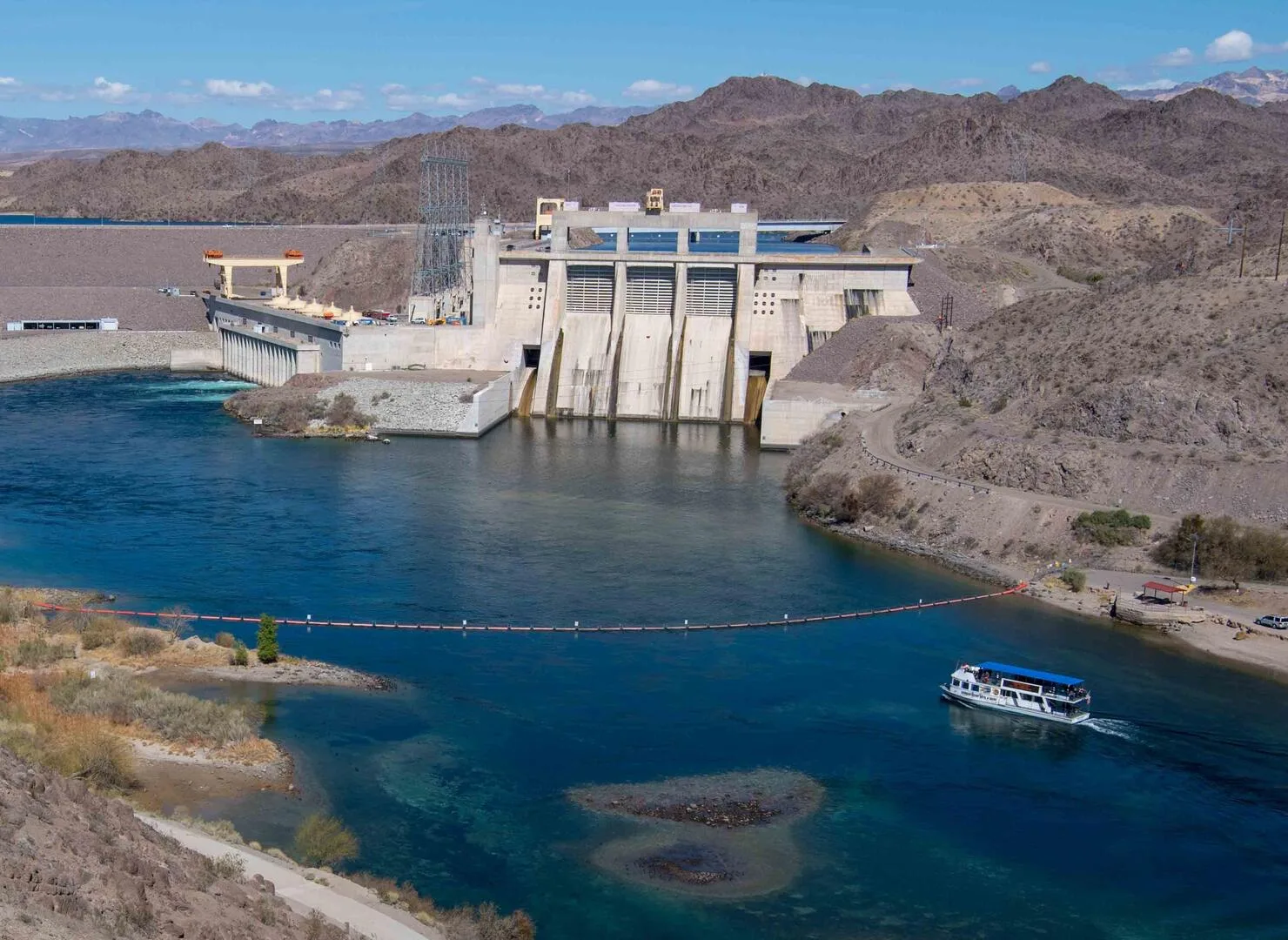
BOULDER CITY, NEV. — On July 29, the Bureau of Reclamation will temporarily reduce water releases from Davis Dam to support local community efforts to decrease the local caddisfly population.
On this date, Reclamation will reduce releases to approximately 2,300 cubic feet per second from 3 a.m. to 12 p.m. Mountain Standard Time.
During this special operation, the water levels below Davis Dam will drop, exposing the caddisfly pupae and larvae living on the banks of the river channel to drying effects and predation by birds and bats. River users should exercise extra caution during these times as lower river flows may temporarily expose or create hazards such as sandbars and unstable riverbanks. Floating or submerged debris or other unfamiliar obstacles may also pose potential hazards until the river returns to normal flow release levels.
The reduced flows along the river reach below Davis Dam support a request from the cities of Laughlin, Nevada, and Bullhead City, Arizona, as part of an ongoing caddisfly abatement study being conducted to combat the nuisance species that negatively impacts businesses and visitors to the area. The decision to conduct these experiments was based on input from a collaborative team including scientists, federal reservoir operators and the local business communities. The experiments are designed to maximize benefits to Colorado River communities, while taking into consideration water delivery requirements, impacts to hydropower production, and local recreation.