






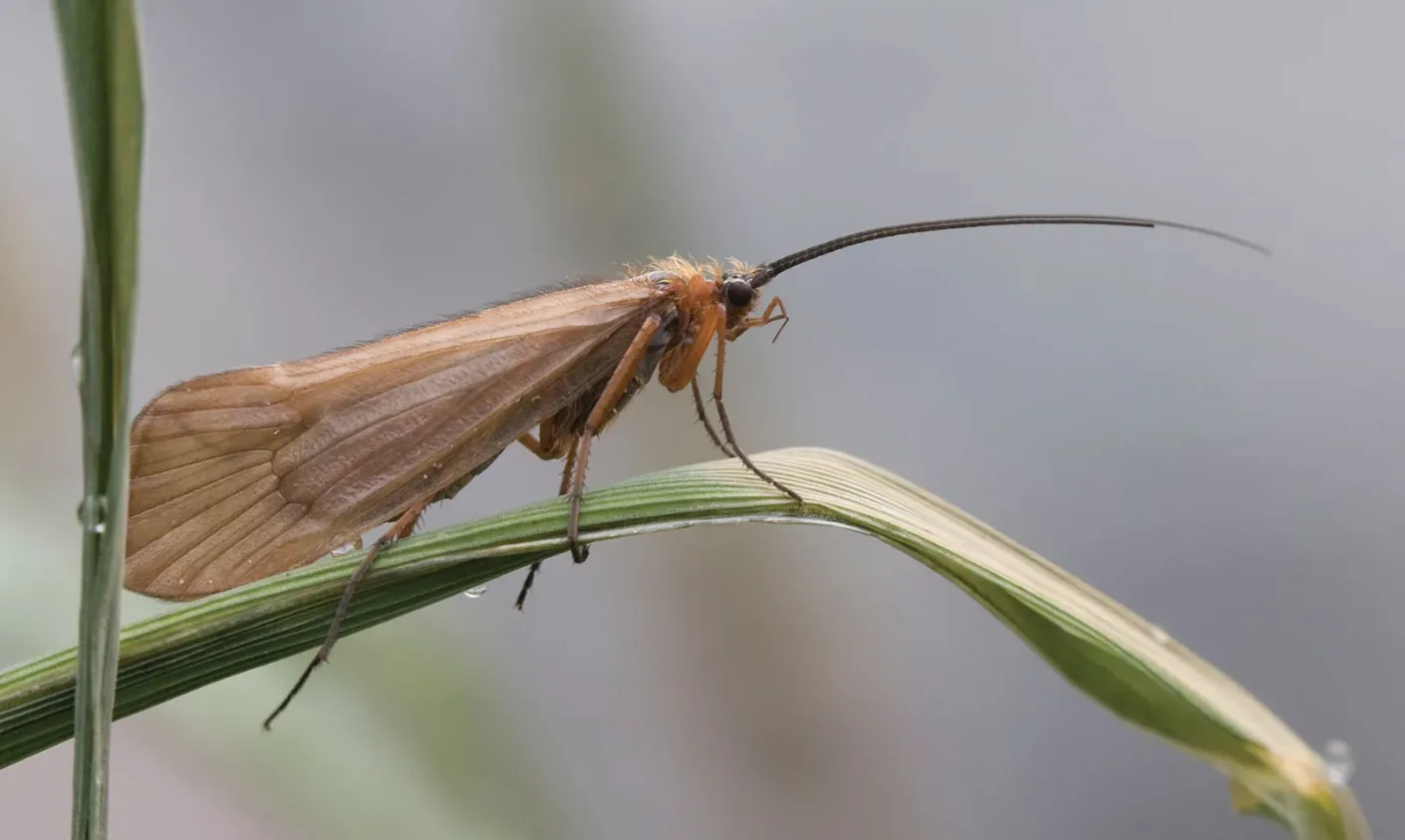
BULLHEAD CITY – Bullhead City Pest Abatement will hold a caddisfly community forum on May 22, 2025, from 6:00 p.m. to 7:00 p.m. at the Bullhead City Council Chambers located at 1255 Marina Blvd. Forum topics will include biology and ecology of net-spinning caddisflies, current nuisance caddisfly abatement strategies, and future pilot studies with a special focus on new program partnerships.
“The primary goal of the forum is to keep the public informed on the caddisfly abatement program, providing updates on future abatement strategies,” said Bullhead City Municipal Entomologist Dr. Michael Cavallaro.
Bullhead City’s net-spinning caddisfly suppression program monitors insect populations throughout the year. Few instances of nuisance net-spinning caddisflies exist globally and are often associated with hydroelectric dams.
This will be the first caddisfly forum this year. Cavallaro leads two caddisfly forums annually, one in the spring and one in the fall. The forums are intentionally timed to coincide with the most intense caddisfly emergence events to promote public education. During the forums, Cavallaro engages with members of the public and provides information about current and future strategies of caddisfly population control.
“Our program implements a multidimensional, integrated pest management approach to net-spinning caddisfly population suppression, which includes biological, cultural, and physical control methods,” Cavallaro said. “Some examples include Rainbow Trout stocking, artificial fish habitat deployment, modified water release profile from Davis Dam, and light trapping.”
Cavallaro intends to highlight several new project and initiatives planned this year during the May 22 forum. He plans to discuss newly created educational materials, modified approaches to increase the effectiveness of low river flows, and novel laboratory toxicity tests with Bt proteins. The public is encouraged to attend the forum and to learn about the new efforts to control the caddisfly population.
“We are incredibly optimistic about the new program partnerships to reduce caddisflies,” said Cavallaro. “It has been a multi-year effort to try and find collaborators to help us test and potentially develop a bacterial larvicide product specific to our nuisance net-spinning caddisfly species.”
For more information about caddisfly population control efforts, visit www.bhcbugs.org.