






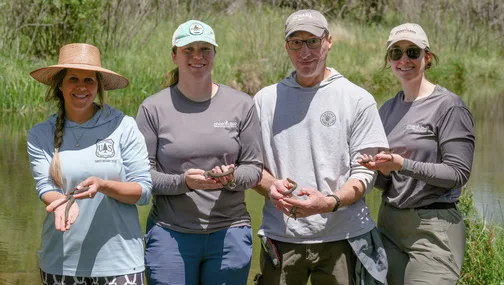
PHOENIX — Over 20 federally-protected snakes have a new, streamside home among the ponderosa pines of the Mogollon Rim after the Arizona Game and Fish Department (AZGFD), the Arizona Center for Nature Conservation/Phoenix Zoo and other partner organizations successfully released a group of zoo-born narrow-headed gartersnakes into the wild and deployed equipment to passively monitor the snakes throughout the summer.
This release marks a conservation milestone for the threatened species– the 100th narrow-headed gartersnake released into the wild from the Phoenix Zoo’s managed breeding program.
On May 19, staff from the Arizona Game and Fish Department, Phoenix Zoo, U.S. Forest Service, Amphibian and Reptile Conservancy (ARC), and the University of Arizona trekked into the Tonto National Forest and released 21 narrow-headed gartersnakes into Canyon Creek to bolster the wild population.
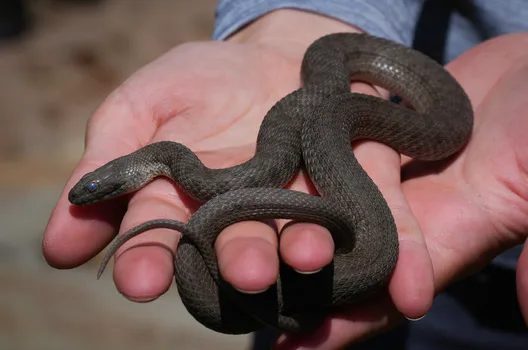
The releases are a part of a long-term effort to recover the narrow-headed gartersnake, a native species to Arizona that is listed as threatened under the Endangered Species Act.
“This is much more than a milestone— it highlights the dedication to establishing a thriving breeding program for this finicky species. Because of the Department’s partnership with the Phoenix Zoo, we have the ability to put more snakes on the landscape to augment low density populations and reestablish populations that have disappeared,” said Mason Ryan, AZGFD Species of Greatest Conservation Need projects coordinator.
To monitor the zoo-born snakes, as well as previously captured wild snakes, each snake was given a unique microchip identifier similar to those used for pets. The team also set up tracking arrays along the creek that will help researchers from the University of Arizona track and monitor the snakes as they slither over the antennas.
The narrow-headed gartersnake is a slender, nonvenomous snake named for the unique, elongated shape of its head. Ranging in color from blue-gray to olive with reddish spots, the gartersnakes are endemic to the rocky streams of the Mogollon Rim in Arizona and New Mexico where they feed on small fish and tadpoles.
The primary threats to the narrow-headed gartersnakes include habitat loss, drought, and competition and predation from certain nonnative invasive fish, as well as crayfish. The impacts of these threats and how to mitigate them are a continuous focus of study.
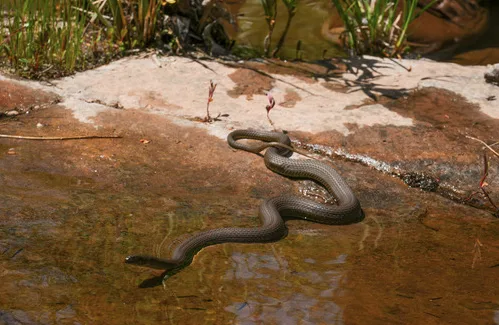
AZGFD and the Phoenix Zoo have partnered with multiple federal agencies in releasing the narrow-headed gartersnakes from its managed breeding program since 2007, with the goal of restoring the species population within its historic range.
“Over the years, we have refined our care for the gartersnakes, including housing them in habitats that closely mimic their semi-aquatic environment and managing them in social groups. This has led to successful breeding with 16 litters born since 2009. We are thrilled that our success at the Phoenix Zoo is benefitting wild populations, and look forward to continuing to contribute to species recovery,” said Whitney Heuring, Phoenix Zoo conservation and science manager.
The narrow-headed gartersnake is one of the state’s Species of Greatest Conservation Need (SGCN), which are native species identified by the Arizona Game and Fish Department that are most in need of conservation action. These efforts are a part of the agency’s mission to conserve Arizona’s diverse wildlife for future generations.
“Species recovery is wrought with challenges that can sometimes seem insurmountable because we can’t always mitigate threats. At the onset of the program, the unknowns far outweighed what we knew, because there is no field guide for this work,” said Ryan. “Through the long-term work at Canyon Creek, we have figured out a lot of these unknowns and moved the needle closer to the Department’s mission of species recovery, which would not be possible without our close partnership with the Phoenix Zoo and University of Arizona researchers.”
Featured Photo: Staff from the Arizona Game and Fish Department, Phoenix Zoo, and U.S. Forest Service pose for a photo before releasing narrow-headed gartersnakes into Canyon Creek.